Showing posts with label Authors. Show all posts

Monday, January 30, 2012

Where are they now? A Look back at our Author Interview Series...

Paper Hangover has been going strong for a while now, with its followers growing weekly, I thought we should recap our Author Interview Series with some updates on what they are up to now.

We kicked off Paper Hangover with YA Highway Blogger, Travel Writer and Debut Author Kirsten Hubbard. LIKE MANDARIN was released March 8th, 2011, and Kirsten had some amazing reviews, a great marketing plan, and an amazing book. LIKE MANDARIN is followed by WANDERLOVE releasing March 13th, 2012.
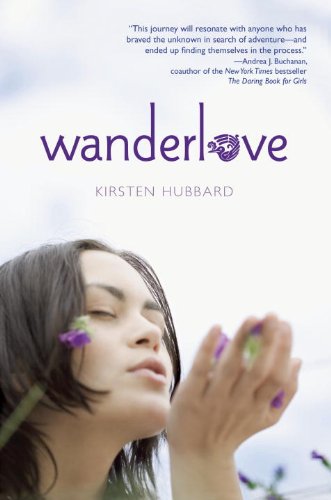
Source: Goodreads.com
It all begins with a stupid question:

Are you a Global Vagabond?

No, but 18-year-old Bria Sandoval wants to be. In a quest for independence, her neglected art, and no-strings-attached hookups, she signs up for a guided tour of Central America—the wrong one. Middle-aged tourists with fanny packs are hardly the key to self-rediscovery. When Bria meets Rowan, devoted backpacker and dive instructor, and his outspokenly humanitarian sister Starling, she seizes the chance to ditch her group and join them off the beaten path.

Bria's a good girl trying to go bad. Rowan's a bad boy trying to stay good. As they travel across a panorama of Mayan villages, remote Belizean islands, and hostels plagued with jungle beasties, they discover what they've got in common: both seek to leave behind the old versions of themselves. And the secret to escaping the past, Rowan’s found, is to keep moving forward.

But Bria comes to realize she can't run forever, no matter what Rowan says. If she ever wants the courage to fall for someone worthwhile, she has to start looking back. 


Add Wanderlove to your To Be Read List today! 


Source: Goodreads
Last time we caught up with C.Lee McKenzie her YA Novel Princess of Las Pulgas was on the horizon. After a successful book release Ms McKenzie is back with a talented group of authors in a anthology titled, THE FIRST TIME.
25 YA authors writing about “Firsts”... first kisses, first loves, first zombie slayings, first realizations.
THE FIRST TIME is edited by New York Times Best Selling Author Jessica Verday, and includes short stories from Cyn Balog, Jackson Pierce, Carrie Ryan and many more.  


Kelly Hashway filled out our next author interview, her Debut Picture Book MAY THE BEST DOG WIN was released April 2011. It went on to be repackaged into a Coloring Book.
Source: Goodreads

Kelly has some other news she recently signed a deal to publish her YA Novel TOUCH OF DEATH with Spencer Hill Press, releasing January 13th, 2013.
Jodi Marshall isn’t sure how she went from normal teenager to walking disaster. One minute she’s in her junior year of high school, spending time with her amazing boyfriend and her best friend. The next she’s being stalked by some guy no one seems to know.

After the stranger, Alex, reveals himself, Jodi learns he’s not a normal teenager and neither is she. With a kiss that kills and a touch that brings the dead back to life, Jodi discovers she’s part of a branch of necromancers born under the 13th sign of the zodiac, Ophiuchus. A branch of necromancers that are descendents of Medusa. A branch of necromancers with poisoned blood writhing in their veins.

Jodi’s deadly to the living and even more deadly to the deceased. She has to leave her old, normal life behind before she hurts the people she loves. As if that isn’t difficult enough, Jodi discovers she’s the chosen one who has to save the rest of her kind from perishing at the hands of Hades. If she can’t figure out how to control her power, history will repeat itself, and her race will become extinct.


All three books sound exciting, and the covers are amazing. Congratulations to Kirsten, C.Lee and Kelly on all their hard work! 

Thursday, November 17, 2011

Writing 101: Page Critique - Emberchyld


Every Thursday the Writing 101 crew, Michael and Lauren, will critique a page from a novel. If you'd like your page critiqued, please fill out the Writing 101: Page Critique Form. Read the previous submission.

First we present the page without comment:


Author: Emberchyld
Title: The Desired
Genre: YA Paranormal
1st Page (242 words)


“You are so important, Sara. To me and to the world,” He whispered, as the sky above us flamed in a lightshow unlike any I’ve ever seen.

No one ever told me that my world would end in a medieval castle halfway around the world from my parents, my school, and my best friend.

No one ever told me that I’d have to choose between two people who I loved—and that my choice would probably mean life and death.

No one had told me that my life would be anything but normal, that the summer before my senior year would be anything more than a tan, a few great photographs, and a lot of good memories.

No one told me that I would be the one who had to save the world.

I wish they had. I would totally have slept in this morning.

Chapter 1
The summer before my eighteenth birthday was supposed to be quiet and normal. Well, about as normal as a summer can be when you’re shipped off to hang out on your grandparents’ farm in Europe while the rest of your classmates get to go to the shore or Philly or Florida. But, still, I wasn’t expecting anything special. Jog every morning, take a few photos for my blog, prep some of my college applications, drink lots of espressos at the local internet cafĂ©.

Yeah, things never seem to turn out the way that you want.


What say you, readers of Paper Hangover? Did this first page intrigue you enough to read on? Please keep your criticisms constructive. Always be polite and considerate of the writer. Michael's and Lauren's line by line edits and then our overall comments, after the jump.

Monday, November 14, 2011

DESTINED eBook giveaway still open...

Today on Paper Hangover we welcome debut author Jessie Harrell. Paper Hangover is stop number 5 on the DESTINED blog tour organized by the wonderful Damaris Cardinali of Good Choice Reading.

I had the pleasure of reading DESTINED a few weeks ago, and I can honestly say it took my breath away. I read the whole book in twenty four hours! It was something I couldn't put down, it was addicting.
Seemlessly blending a sassy, modern day voice with the setting of Ancient Greece. Jessie manages to make the prose bleed hotness, from both the male and female character perspectives, yet capturing the innocence of a teenage girl, caught in a world far from her own sheltered palace.

Here is a sneak peek in the first chapter, giving you a glimpse in to the strong, sassy female lead Jessie has created.

Destined, Chapter One...
My stomach churned as the smell of ground charcoal and nearly-rancid oil smeared across my eyelids. Whoever decided that greasy anything should be part of a daily beauty routine deserved permanent exile.
    The stink never seemed to bother Maia though. She hummed quietly while layering on the goop -- and it was driving me nuts. My teeth ground into my cheek until I managed to shred another piece of skin.
    “Will you stop fidgeting? I’m going to have eye paste all over your face if you don’t hold still.”   
    Servant or no, Maia was good at keeping me in my place. “Sorry.” I stopped chomping my cheek in favor of twitching my foot.
    Maia placed her weathered hand against my forehead; her eyes wrinkled around the edges with concern. “You don’t seem yourself today. Are you sure you’re well?”
    My eyes darted to the bird sitting on my bookshelf. Maia followed my gaze and gasped.
    “Good heavens, Psyche. How’d a pigeon get in here?”
    She dropped the makeup onto my vanity and made as if to shoo the bird away. Instinctively, I snatched her wrist.
    “No, don’t. I let her in.” I paused, debating whether it was worth correcting her that the bird was actually a dove, and not a pigeon. Or noting that the dove would turn into Aphrodite as soon as Maia left.
    Better just to let it go.    
    “I like having her here. I’m just worried Father will make me get rid of her.” I met Maia’s eyes and plastered on my best smile -- the one Aphrodite helped me master when she wasn’t a bird.
    Maia’s shoulders relaxed and she started in on phase II of my beautification regimen: crushed mulberry blush. But there was no relaxing for me.
    Something was up. This was the fifth day in a row Aphrodite had come to visit. Sure, she’d shown up a couple of months ago, just after I started getting daily admirers at my window. She’d said she liked watching beauty get the attention it deserved. It was part of her domain, after all. And then she’d dropped in randomly after that, but not daily.
    Even though I pretended like nothing was different, I knew she wanted something. Something more. Goddesses don’t just hang out with mortals for the fun of it. But what?


Jessie's path to publication has not been easy, yet she produced a fabulous novel and her team of designers, photographers and editors did her proud. The finished product is a glossy, eye catching dream, of any writer.

****Paper Hangover Giveaway!***

Jessie has given us an Ebook of DESTINED to giveaway, the giveaway will be open all the way until the formal release date of November 17th, 2011.
To be eligible you need to be a Paper Hangover follower and leave a comment for Jessie, include your email address and she will choose the winner on the 17th!

You can purchase an advanced copy of DESTINED here.

Website: www.jessieharrell.com
Twitter: @JessieHarrell

Become a friend on Facebook at the Jessie Harrell Fan Page.


Saturday, November 5, 2011

Debut Author Jessie Harrell and the much anticipated DESTINED

Today on Paper Hangover we welcome debut author Jessie Harrell. Paper Hangover is stop number 5 on the DESTINED blog tour organized by the wonderful Damaris Cardinali of Good Choice Reading.

I had the pleasure of reading DESTINED a few weeks ago, and I can honestly say it took my breath away. I read the whole book in twenty four hours! It was something I couldn't put down, it was addicting.
Seemlessly blending a sassy, modern day voice with the setting of Ancient Greece. Jessie manages to make the prose bleed hotness, from both the male and female character perspectives, yet capturing the innocence of a teenage girl, caught in a world far from her own sheltered palace.

Here is a sneak peek in the first chapter, giving you a glimpse in to the strong, sassy female lead Jessie has created.

Destined, Chapter One...
My stomach churned as the smell of ground charcoal and nearly-rancid oil smeared across my eyelids. Whoever decided that greasy anything should be part of a daily beauty routine deserved permanent exile.
    The stink never seemed to bother Maia though. She hummed quietly while layering on the goop -- and it was driving me nuts. My teeth ground into my cheek until I managed to shred another piece of skin.
    “Will you stop fidgeting? I’m going to have eye paste all over your face if you don’t hold still.”   
    Servant or no, Maia was good at keeping me in my place. “Sorry.” I stopped chomping my cheek in favor of twitching my foot.
    Maia placed her weathered hand against my forehead; her eyes wrinkled around the edges with concern. “You don’t seem yourself today. Are you sure you’re well?”
    My eyes darted to the bird sitting on my bookshelf. Maia followed my gaze and gasped.
    “Good heavens, Psyche. How’d a pigeon get in here?”
    She dropped the makeup onto my vanity and made as if to shoo the bird away. Instinctively, I snatched her wrist.
    “No, don’t. I let her in.” I paused, debating whether it was worth correcting her that the bird was actually a dove, and not a pigeon. Or noting that the dove would turn into Aphrodite as soon as Maia left.
    Better just to let it go.    
    “I like having her here. I’m just worried Father will make me get rid of her.” I met Maia’s eyes and plastered on my best smile -- the one Aphrodite helped me master when she wasn’t a bird.
    Maia’s shoulders relaxed and she started in on phase II of my beautification regimen: crushed mulberry blush. But there was no relaxing for me.
    Something was up. This was the fifth day in a row Aphrodite had come to visit. Sure, she’d shown up a couple of months ago, just after I started getting daily admirers at my window. She’d said she liked watching beauty get the attention it deserved. It was part of her domain, after all. And then she’d dropped in randomly after that, but not daily.
    Even though I pretended like nothing was different, I knew she wanted something. Something more. Goddesses don’t just hang out with mortals for the fun of it. But what?


Jessie's path to publication has not been easy, yet she produced a fabulous novel and her team of designers, photographers and editors did her proud. The finished product is a glossy, eye catching dream, of any writer.

****Paper Hangover Giveaway!***

Jessie has given us an Ebook of DESTINED to giveaway, the giveaway will be open all the way until the formal release date of November 17th, 2011.
To be eligible you need to be a Paper Hangover follower and leave a comment for Jessie, include your email address and she will choose the winner on the 17th!

You can purchase an advanced copy of DESTINED here.

Website: www.jessieharrell.com
Twitter: @JessieHarrell

Become a friend on Facebook at the Jessie Harrell Fan Page

You can jump on the tour at the following blogs...

6-Nov Nikki Katz
6-Nov Fictional Distraction
7-Nov Daisy Chain Book Reviews
8-Nov MundieMoms

Thursday, October 27, 2011

Writing 101: Page Critiques

If you would like to have a page from your novel critiqued by the Writing 101 crew, we are now taking submissions. (See the form below.) Every Thursday Michael and Lauren will critique a page from a novel.


Genres We Accept

We accept any genre under the YA umbrella (mainstream, paranormal, fantasy, sci-fi, et al.).


What We Will Critique

We will critique first pages and anything else you need feedback on.

The all important first page is essential to get right...but so is the rest of you novel. It's not chopped liver.

We recognize that sometimes you may need targeted feedback on a scene that doesn't take place on the very first page of your novel. This is why we're opening up the flood gates and allowing you to submit a random page from your novel.


How Will It Work?

Along with your submission, you'll simply tell us that your page is not the first page of your novel and you'll describe to us what exactly are you looking for in your critique.

For instance, you may need feedback on your love scene, or you might need direction for your fight scene, or maybe there's a craft technique that you're not quite sure you understand and you need an outsider's eyes to make sure you're on the right track.

Whatever your issue is just let us know. We will focus our critique towards your needs, directly targeting the specific area where you feel you may need the most help.


More Info

A random number generator will choose which page(s) we will critique that week.

Each week we will post one or two submitted pages to the blog, including our notes.

Readers of Paper Hangover will be encouraged to offer their own constructive criticisms in the comment section.


Thursday, October 13, 2011

The Goldilocks Zone


Today's post is about balancing description in your narrative. You don’t want too much description, or not enough description. You want to find that infamous Goldilocks Zone where the amount of description is just right.


Incorporate All the Senses

You've probably heard this one a gazillion times. That's because it works. 

Using any other sense besides sight makes a huge difference in narrative because sight is the sense most of us rely on most frequently. It's useful and necessary, but kinda boring.

The addition of sound, touch, smell and taste enhances the reader experience because those senses are used less frequently, making them stand out more.

Try to include as many senses as you can, but only the ones most important to the thing you are describing. It isn't necessary to use all the senses in every given scene.

How do you know which senses are most important? See the next item directly below.


Zoom In On Unique/Contrasting Details
  • A mouse the size of an elephant
  • An elephant the size of a mouse
  • A wagon shaped like a rocket
  • A cave that smells like laundry detergent
  • Roses that smell sour
  • A car wreck that sounded like guitar strings snapping
  • An ice cube that burns
  • Salty ice cream

Not all of your descriptions will be as contrasting as those examples, but the key is to find something so specific about the thing you’re describing that the image implants into the readers head and they begin to experience the story first-hand.

Pick one or two things that stand out in your setting or characters and describe that in great detail. (See, “Description Length”)


Filter Description Through the POV Character

When the POV character directly conveys how they feel about the sight/smell/sound/etc. they are experiencing, it makes the description more entertaining for the reader. Simple as that.

People read encyclopedias when they want a list of facts. People read stories because they want to become immersed in a world outside of their own.

Revise that info dump until it feels like something the POV character would actually think about or say in that moment. Show their personality. Express who they are on the surface and at their core. It will bring your story to life.


Skip the Mundane

We live in an age where the world is literally at our fingertips. There are some things that just don’t require much explaining in fiction. Some things are universal enough that you can mention them without going into a lot of detail about it.

You always need to set the scene, and some description is always required, but a hospital is a hospital, a church is a church, and a school is a school no matter where you go.

Of course, not all hospitals, churches or schools look exactly the same as one another. They come in all different sizes and depending on where you are in the world, they will vary in numerous other ways. Those will be the unique details you pick out to describe your specific setting.

Beyond that, readers will imagine the kind of setting that’s most familiar to them. When we read a story set inside a school for instance, we tend to imagine the school we used to attend or the school we send our children to. We imagine the hospital where we go to see our personal physician, and the church we were baptized in, etc.

Only if there is something unique about the setting as described in the story we’re reading do we begin to see a different image in our minds.

For instance, the school may be described in the story as being held in a castle with lots of secret passageways, the professors are wizards, and ghosts frequently roam the halls. (See: “Zoom In On Unique/Contrasting Details.” Also, Harry Potter.)


Description Length

It’s not the size of the boat. It’s the motion in the ocean.

Sometimes you’ll need a paragraph or more to describe something. Other times you’ll need just a sentence or two. Fantasy writers, for instance, usually need to include more description than thriller writers because of the various new concepts that are introduced in a fantastical setting.

The Goldilocks Zone is what you make it. Everyone has their own tolerance level when it comes to description. Some readers require more description than other readers do. Each individual reader will bring his or her own preferences to your story, and there’s no way to anticipate that.

Utilizing the techniques above have helped me stay within a general safe zone.

Thursday, September 29, 2011

Writing 101: How To Write a Banned Book

In honor of Banned Books week, this Writing 101 post is a joint effort from both Michael and Lauren. We’ve put together some fun tips to help you write a banned book. So, fasten your seat belts, make sure your seat is in the upright position and place your tongue firmly in your cheek. It’s going down.


1. The material was considered to be "sexually explicit".

You ever heard the phrase sex sells? Well, sex also gets your book banned. The number one thing to include in your potentially banned book is “sexually explicit material”. That's not as vague a term as it sounds.


We all know that sex doesn't happen in real life. Authors make it up. It’s common knowledge that the stork brought us all here...unless you believe in other alternative theories...


There's no reason to ever include sexually explicit material in a book unless you want your book banned.


Dear author, if you want to get your book banned by the powers that be, you can’t be afraid to get down in dirty in your fiction. The key here is details, details, details. You want to include every bump and every grind. The act should go on for pages, maybe even the entire book. Go crazy. Then go crazier!


And while you’re sexing it up, consider giving readers a double wammy and hit'em with some homosexuality.


Caution: Never include anything homophobic or anti-gay because your book will never attain banned books status. We checked. (“We” being highly skilled journalists and thorough investigators of such things.)


2. The material contained "offensive language".


Have your main character and people around them swear a great deal. Real teenagers are not exposed to such depravity in their day to day lives, so the appearance of such in fiction is bound to exert a bad influence on them. Soon they will be swearing with abandon and parents nationwide will cry for the censorship of your work.


But wait, it gets better. As you well know by now, including sexual violence in your book is a surefire way to raise hackles. But if you want to really guarantee bannination, there’s one more step you can take: give that violence a name. 

Oh, yes, you know what I’m talking about. The r-word. Alright, sometimes teens get assaulted--but they definitely shouldn’t know the proper name for it! That’s just vile. Someone might read a book, stumble across that dangerous and disgusting r-word, and decide they want to try it out for themselves. Worse still, reading a book like Speak by Laurie Halse Anderson might encourage teens to, well, speak up for themselves about their own experiences. Make teens rock the boat, get your book banned. Easy.


3. The materials was "unsuited to any age group".

Your potentially banned book should be unsuited to any age group. But how exactly do you write a book that’s unsuitable for any age group? Very easy. If your book should never have been written in the first place, you’re on the right track. If that's what you have in your sock drawer, polish up that story now and get it into the first library on your block. They will be sure to ban your book for its unsuitableness.


If you haven’t written something like this yet, here’s how you do it: first you must use each and every one of the the tips in this award winning article. But you must go even further than that. You must offend your readers with every chapter, every paragraph, every sentence, every word. Shoot for a masterpiece that is entirely unreadable by any one.


4. The material was written in 1995.


According to the ALA's chart, 1995 was the year that most books were challenged/banned since they’ve been keeping track of such vital information.


Here’s what you need to do, Biff. Wait for Doc and Marty to go rescue Jennifer. Then steal the DeLorean! Make like a tree and get your ban worthy book to 1995! Tell your younger self about how crappy the future is because of climate change and that he/you should invest in Apple products.


Wait. I mean, give your younger self the banned book you’ve already written and tell him to publish it as the eBook. He’s going to say that no one reads eBooks to which you’ll respond, “Do it, Butthead! I’m from the freakin’ future.”


Hopefully, when you come Back to the Future you’ll be able to look back on your historic banned book that, by its very existence, has created an alternate reality where you’re the king of like banned books or whatever. You’ll also be married to Lorraine and have shot and murdered George McFly, and climate change will still be a reality. At least, you invested in Apple!

“Last week I was in my other, other Benz.”


5. The material contained “violence”.


Teens live really peaceful lives and are unfamiliar with the concept of violence, except for what they see on the news, TV and movies, video games, at home, at school, and on the street. The point is, it’s important to shelter them from it in fiction. Adults don’t want them to get any ideas or, god forbid, see their personal experiences reflected in what they read. Wait, I mean, what personal experiences? I think we’ve established that real teens are not exposed to violence.


So if you open that dangerous door, dear author, you are well on your way to angering adults and getting challenged. Of special note: hate crimes, sexual assault, and domestic abuse. Those are the kinds of violence society really wants to sweep under the rug.


6. The material upset governments.


Governments are actually the only entities who can ban and have banned books completely from society. They can enforce a ban legally through the court system and can punish infractors with penalties.


The only reason this item isn’t number one is because different bodies of government vary on what criteria causes a book to be banned. Usually a government will resort to censorship when there are political, religious or moral issues with the written material.


Now normally, you're a meek, respectful, and polite author. But that attitude will not get you a banned book. Your job is to upset, anger and be a down right meany-pants. You must vilify your political opposition. Your religious arguments should be one-sided and inconsiderate of the majority’s belief system. Also, don’t forget to demean the opposite sex and include other immoralistic values. Speak your dark, infested mind.


There is no one way to upset governments. So combine all of our advice in one giant smorgasbord of ban worthy material.


7. The material upset parents.


Parents always know what’s best for their children. They are never wrong under any circumstance. And children are incapable of thinking for themselves. They don’t know any better. They’ll read any old thing you put in front of them and will likely suffer a lifetime of traumatization when exposed to certain fiction.


This is where you come in dear author. You must offend these parents if you want your book banned. Parents must disagree with the value of your book in every way. You must make them take umbrage with your fiction so strongly that they have no choice but to do what's right for the entire first world and force their opinions on the rest of society, who will no doubt listen and agree.


We are all aware that there is never a choice in which books to read and which ones to simply not read. We're all forced to read every single book that has ever been written, so banning books is a great way to protect us from like the Big Bad Wolf and stuff. Not only does banning books free us of the tedious nature of making a choice for ourselves, it also scares authors away from writing great stories...I mean, inappropriate material. As a society, we’ll force authors to churn out tame fiction for the masses that never challenges our lazy minds or provokes critical thought.


Deep topics in books aren’t open for discussion and shouldn’t be. Engaging in analytical discourse is a pointless endeavor. Banning is always the answer to everything. It is not a knee jerk reaction at all. Who cares if no one's read a word of your book yet to know for sure if it's actually as bad as we think it is? If it merely sounds like it's harmful to our children--Banned! Parents are your saviors!

“I’ll tell you where you can find fantastic beasts. Not in this household!”


8. The material upset schools and libraries.


Schools and Libraries have challenged more books than any other institution between 1990 and 2010. Aren't our children lucky to have such filters?


As we’ve seen from item number 7 above, parents are very capable of deciding what's appropriate for their own children and for everyone else. However, why should schools and libraries let parents do all that hard work?


Shouldn’t parents instead rely on another entity that can make that choice? You know, the same way parents remove the freedom of choice from their children...and everyone else.


In all reality, parents don’t really know any better than their children. They’ll probably just allow their kids to read any old thing. But even if they are awesome filters for their own households, they may not catch everything. They need schools and libraries to back them up or to do the job entirely.

Plus, what libraries and schools absolutely don’t need more of is books. They’ already full of them. You can help them out by writing a book that they will surely ban. It makes total sense.


Everything you applied to parents in the above item, you must apply it to schools and libraries as well.


Topics to Avoid When Writing a Banned Book


Don’t worry yourself writing about serious topics such as abortion, anti-ethnicity, racism, or as mentioned above, homophobia, which doesn’t even make it onto any lists at all. Not that many people care strongly enough about those topics to ban them from books. People are pretty much chill on those.


Also don't try to offend Community Groups and Prisons. They are both the least likely groups to ban your book. And one is instead more prone to shanking. The other we can’t can’t even tell you about because we’ve never been to prison. But we’ve heard stories of sexually explicit violence that’s unsuited for any age group and would especially upset any parent, school or library in the year of 1995.


But Why Write a Banned Book?


Simple! You ever noticed how much publicity those things get? Word of mouth is the best way to get your book flying off the shelves, and no news spreads faster than outrage. First comes the outrage from parents, schools, and libraries at your audacity to write such a book. Then comes the outrage from “free thinkers” who don’t think any books should be banned. Before you know it, your name will end up on the news and in lists all over the Internet. And just like J.K. Rowling and Stephenie Meyer, you will be rolling in the dough.


Another reason some people might put forth is that banned books are often so honest, raw, delightful, and painful that they make everyone sit up and take notice for good or bad. And we hear some people like to write honest books. But it’s also okay if you’re just itching to write a scene with some blood and guts flying. As we have thoroughly demonstrated by now, it’s not the thought that counts, it’s the banning!

Monday, September 19, 2011

Molly O'Claire from WITCHHUNTER gives us the low down on Witches....

Today we welcome young adult author Kathleen S.Allen and WITCH HUNTER character Molly O'Claire to Paper Hangover. Kathleen began writing at the age of eight when she self-published her first book of poems. She had her first poem published when she was 17. She writes poetry, lyric essays, short stories and novels. She writes in different genres including fantasy, science fiction, space opera, contemporary, horror and mystery.

Kathleen has shared with us a character Interview with Molly O’Claire from her Young Adult book: WITCH HUNTER

Welcome to the interview Molly. Please introduce yourself to the audience.

MOLLY: Hi, my name is Molly O’Claire, nice to meet you. *waves*
KATHLEEN: Tell us about your latest visit to your aunt in Salem, Massachusetts, I understand there was some strange happenings last summer.
MOLLY: There was! My mom got this great job interview in Boston so she left me at my Aunt Sarah’s Bed and Breakfast in Salem. It’s called WITCHES RETREAT, isn’t that fun?
KATHLEEN: Is your aunt a witch?
MOLLY: Yes, she has a coven and everything, she’s so cool.  She also reads Tarot cards.
KATHLEEN: Tell us about the deaths.
MOLLY: Yeah, that was bad. My aunt’s friend, Becca took me whale watching and I saw a guy go overboard. He was the first one.  [shudders]
KATHLEEN: You got involved with figuring out who killed him?
MOLLY: I did. I met this really nice girl, Chloe, well, she isn’t nice at first, she’s got this sarcastic sense of humor that puts people off. We’re BFF’s now. Anyway, Chloe and I started investigating once we found out he was the son of another witch in Aunt Sarah’s coven. More people started dying, all connected to Aunt Sarah’s coven.
KATHLEEN: But, you solved it.
MOLLY: I did, but it’s still being investigated and I promised I wouldn’t talk about it yet. [laughs] Well, not too much.
KATHLEEN: All right. Let’s change the subject. Tell us how you liked Salem.
MOLLY: I’m from Michigan, Ann Arbor to be exact so It was great to take a trip to Salem. You should’ve seen my mom’s eyes bug out of her head when she saw Aunt Sarah’s Bed and Breakfast! My mom---her name is Mary---and Aunt Sarah are identical twins but they are so different!
KATHLEEN: How do you mean?
MOLLY: My mom is conservative; she is a Professor of English Literature at the University of Michigan and wears tailored suits. Tailored, can you imagine? Aunt Sarah is more like a free spirit, she wears long skirts, goes barefoot a lot and always has a gazillion bracelets on each arm. Plus she wears her hair long and mom’s is short. Aunt Sarah carries around Tarot cards and whips one out any time she has to make a decision about anything!
KATHLEEN: Sounds like you admire your aunt.
MOLLY: I do, she’s not afraid to be herself, even if everyone around her is not like her. I admire that. Plus she’s a witch and that is way cool!
KATHLEEN: What is your favourite place to visit in Salem?
MOLLY: Aunt Sarah took me to this Witch festival on the beach, we ate junk food and I got my face painted and oh, we saw a woman take her top off, it was hilarious! Aunt Sarah called it “being skyclad.” No way am I ever going to do that!
KATHLEEN: What else do you like?
MOLLY: I love the Witches Brew café. They make the best Lattes. Aunt Sarah does Tarot card readings there.
KATHLEEN: Anything else?
MOLLY: Well, Aunt Sarah took me to the WITCHES BALL, at this creepy mansion. She read Tarot cards there so we got to get in for free. It was so much fun!
KATHLEEN: I see that we are almost out of time, Molly. Thank you for coming in to talk to us today.
MOLLY: Sure, thanks for having me.  You should come to Aunt Sarah’s B&B for a visit!
KATHLEEN: Maybe I will. Thanks, again.

Kathleen is giving away a copy of Witch Hunter today! Rules: Be a follower and leave an email address so we can give you the good news!

ABOUT WITCH HUNTER:
When 15 year old Molly visits her eccentric Tarot card reading aunt in Salem, MA who just happens to be a witch; her aunt takes her to Wiccan coven meetings, festivals and occult bookstores. Her aunt predicts fun. But, even her aunt doesn't predict murder. When Molly discovers a link to the Salem Witch Trials, her own ancestry and the murders, Molly is scared. Is she the next one to die?


Find Kathleen on Twitter: @kathleea
Or her Website
Find Witch Hunter on FaceBook
Kathleen guest blogs every Wednesday on DownTownYA

Thank you so much Kathleen for being with us today!

Monday, July 11, 2011

Leanne Beattie talks 'Cage of Bone'

This week on Paper Hangover, we welcome Leanne Beattie author of CAGE OF BONE.

Leanne’s Blog is aptly named ‘Writing to Save my Soul,’ she hits home with her creativity and enthusiasm for writing, I hope it will rub off just interviewing her.

CAGE OF BONE is an indie release for Leanne, like many of our authors featured in the next month, working on book promotion is tiring but fulfilling.

The message behind CAGE OF BONE is one we can all recognize, it may not be through the same medium as suicide but denying our feelings is an all to familiar fall back. Learning to deal with feelings, of grief, unhappiness or self-loathing are all lessons we could all have used at some time in our lives.

Leanne, Where did the idea for CAGE OF BONE come from?

I am very influenced by music and get a lot of ideas from lyrics. CAGE OF BONE grew out of a phrase from the Jann Arden song Will You Remember Me? At first I thought I would be writing about someone with an eating disorder but eventually the book turned into the story of a girl eaten up with grief.

Tell us about CAGE OF BONE.
 
CAGE OF BONE is a young adult novel about a 16 year-old girl, Ronnie Campbell, as she tries to cope with her sister’s suicide. It’s an emotional story because Ronnie is very confused about the death. Her sister was the quintessential “golden girl” in high school: popular, smart and going places, so her suicide leaves Ronnie struggling to find answers. On top of everything, Ronnie’s parents are getting divorced and her father is starting a new family with another woman, so Ronnie feels abandoned and pushed aside. At an age when other kids are dating and going to parties, Ronnie is facing some pretty heavy burdens.

Once I had the basic story idea, I got an image of a girl who seems tough on the outside but is really hurting. Her toughness is all a façade. I think a lot of people can relate to that because everybody is suffering in some way. Griffin McNay, her love interest, is the ideal boy for Ronnie: cute, creative and understanding. He shows her there is more to life than what she is experiencing right now. Her best friend, Danielle, accepts Ronnie as she is, flaws and all, and has great faith in her.

CAGE OF BONE was released as an e-book on Amazon.com and Smashwords.com in May 2011. There will also be a print version available in late July.  

What path led you to self-publishing? How does it feel to go it alone? Any advice?
 
I have a really good friend who has been an independent musician for many years and I was always fascinated by the process he went through of creating music and sharing it with the world. Because of him, I understood I didn’t need to wait for an agent to validate my writing by offering me representation—I could do it all myself.
As a self-published author I have total control of my writing career, everything from creating the product (the book) to editing, cover design, and marketing. It takes a lot of confidence and energy to self-publish because if you don’t do something yourself, it doesn’t get done. You have to have complete faith in your work to be able to sell it to others.

I am very active on Twitter (my handle is JoyMagnet) where I have developed a lot of good relationships with writers and readers, so I don’t feel like I am going it alone. My Twitter friends have been great at sharing my work with their followers and I do the same for them. It’s a very cooperative community and we share the ups and downs of being indie authors. I also have a Facebook author page, a blog and I have listed my book on Goodreads.

My advice would be to make connections with other writers and build a community long before your book is released. Don’t be afraid of sharing information because in the end it all comes back to you. By helping others you help yourself.

CAGE OF BONE is available here: www.amazon.com and here: Smashwords.com

You can find Leanne on Twitter @JoyMagnet

Blog: www.leanneardellebeattie.wordpress.com Or on Facebook

Thank you so much Leanne for joining us today on Paper Hangover.


Thursday, June 16, 2011

Writing 101: The Story Circle

A while ago, Dan Harmon (creator and head writer of Community) wrote a series of posts on his website’s forum breaking down story structure in a hilarious concise fashion. His methods were written with television in mind, but these story techniques are universal for any writer and any medium. They are based on Joseph Campbell’s The Hero’s Journey, but simplified for modern storytelling. The way he breaks it down has helped me re-evaluate my own work. It’s amazingly simple.


First, you begin by drawing a circle. Divide it in half vertically, and then divide the circle again horizontally. Starting from the 12 o’clock position and going clockwise, number the 4 points where the lines cross the circle: 1, 3, 5 and 7. Next, number the quarter-sections themselves 2, 4, 6 and 8.

(The images from Dan’s posts were missing so I constructed my own visual representation of the Story Circle):

Download this if you want. Print it out. Doodle all over it.

 
Dan says:
That horizontal line dividing the circle is the first one you want to think about when creating a story. What's above it and what's below it?

Robocop: Above the line, cop. Below the line, Robocop.

Die Hard: Above the line, bad marriage. Below the line, terrorist attack.

Citizen Kane: Above the line, news reel. Below the line, truth.

MacBeth: Above the line, hero. Below the line, villain.

Star Wars: Above the line, farm boy. Below the line, adventurer.

The Incredible Talking Dog: Above the line, dog can't talk...

Back to the Future: 1985 / 1955

etc. etc.


1. You (a character is in a zone of comfort)

Dan says:
ESTABLISH A PROTAGONIST... Who are we? A squirrel? The sun? A red blood cell? America?


2. Need (but they want something)

Dan says:
SOMETHING AIN'T QUITE RIGHT… Something is wrong, the world is out of balance. This is the reason why a story is going to take place. The "you" from (1) is an alcoholic. There's a dead body on the floor. A motorcycle gang rolls into town.


3. Go (they enter an unfamiliar situation)

Dan says:
CROSSING THE THRESHOLD… For (1) and (2), the "you" was in a certain situation, and now that situation changes. A hiker heads into the woods. Pearl Harbor's been bombed. A mafia boss enters therapy.


4. Search (adapt to it)

Dan says:
THE ROAD OF TRIALS… Adapting, experimenting, getting shit together, being broken down. A detective questions suspects. A cowboy gathers his posse. A cheerleader takes a nerd shopping.


5. Find (find what they wanted)

Dan says:
MEETING WITH THE GODDESS… Whether it was the direct, conscious goal or not, the "need" from (2) is fulfilled. We found the princess. The suspect gives the location of the meth lab. A nerd achieves popularity.


6. Take (pay its price)

Dan says:
MEET YOUR MAKER… The hardest part (both for the characters and for anyone trying to describe it). On one hand, the price of the journey. The shark eats the boat. Jesus is crucified. The nice old man has a stroke. On the other hand, a goal achieved that we never even knew we had. The shark now has an oxygen tank in his mouth. Jesus is dead- oh, I get it, flesh doesn't matter. The nice old man had a stroke, but before he died, he wanted you to take this belt buckle. Now go win that rodeo.


7. Return (and go back to where they started)

Dan says:
BRINGING IT HOME… It's not a journey if you never come back. The car chase. The big rescue. Coming home to your girlfriend with a rose. Leaping off the roof as the skyscraper explodes.


8. Change (now capable of change)

Dan says:
MASTER OF BOTH WORLDS… The "you" from (1) is in charge of their situation again, but has now become a situation-changer. Life will never be the same. The Death Star is blown up. The couple is in love. Dr. Bloom's Time Belt is completed. Lorraine Bracco heads into the jungle with Sean Connery to "find some of those ants."


Dan Harmon goes on to explain:
… the REAL structure of any good story is simply circular - a descent into the unknown and eventual return - and that any specific descriptions of that process are specific to you and your story.
It's not that stories have to follow this structure, it's that, without some semblance of this structure, it's not recognizable as a story.
There are some exceptions to everything, but that's called style, not structure.
When I talk about "story structure" I'm talking about something very scientific, like "geometry." Your story could have "perfect" structure, in that it hits all the resonant points craved by the audience mind, but that won't make it a perfect piece of entertainment. Example:

Once upon a time, there was a thirsty man on a couch. He got up off the couch, went to his kitchen, searched through his refrigerator, found a soda, drank it, and returned to his couch, thirst quenched.

That was "perfect story structure." On the other hand, the story sucked.

Here's a converse example:

Once upon a time, a car exploded. A Navy Seal killed a werewolf. Two beautiful naked women had sex with each other, then a robot shot the moon with a Jesus-powered laser. The world became overpopulated by zombies. The End.

Lot of exciting, creative stuff happening, but very little structure. Again, boo, but the lesbian scene did give me a boner. What do you want? You want both. You want to be cool, but you're going to be cooler if the structure is there. Cool stuff with no structure is like that perfect scene you recorded when you left the lens cap on. "Guess you had to be there." Show me an army of zombies and I might say "cool zombies," but I'm not going to "be there."
 
Links to the full posts. All are well worth a read.

Monday, June 13, 2011

Debut Author Dawn Metcalf Talks World Building and Speculative Fiction

Today we introduce Dawn Metcalf, her debut LUMINOUS will be released June 30th, from Dutton.

Dawn is a regular on Twitter, Co-Founder of the Twitter Chat#YaLitChat and what I believe to be an authority on world building and all things Karate and Chocolate.

I asked Dawn to join us to talk World Building and Speculative Fiction.

Most of our readers write books with a major element of world building. What are your tips for World Building?

My favorite thing about speculative fiction is solid world-building, that it is in some way entirely believable and true and that I can trust-fall into the author's arms and completely immerse myself in this strange reality that they've created. For me, a lot of the richness comes in subtle things: the little turns of phrases, idiosyncrasies, habits and symbolism that pop up throughout the narrative as second-nature to the characters, supported by the world itself. It's not just a matter of the religion or long names with Xs, Ks or apostrophes in odd places, but the background myths and stories that exist inside the narrative, the superstitions and Things You Just Don't Do make it real for me. For example, no one said  "Voldemort", they said "You-Know-Who" in hushed tones. That said a lot more to me about the character and the world's opinion of this person than any long paragraph of narrative ever could. It's the smallest things that, added together, give depth to a storybook world.

How do you organize your thoughts and the world you are building from conception to completion?

Honestly, it's not hard because, in my mind, the world is logical--no matter how illogical or crazy I make it, *I* believe it so everything has to stay internally relevant and "realistic" given the surreality. I think that's a true test of good world-building: if, as a reader, I believe that I could ask the author a question about any aspect of their story and they could instantly turn-around a clear answer, then it's real. I feel confident because my guide, the writer, wrote confidently. If I walk into my writing knowing what a character would or would never do, then I have to do the same with how the world would and would never work. There are some great stories that have setting as a strong character: Middle Earth in THE HOBBIT, the entirety of DISCWORLD in the many Terry Pratchett's stories (my favorite by far being the Chalk in the Tiffany Aching series), the swamp in CHIME, the reservoir in IMAGINARY GIRLS, the moors of THE NEAR WITCH...I'll admit that these are some of my favorite devices in writing! While some might need charts and notebooks, all I really need is to dive right in and believe.

Is there a coherent order to your worlds or is it whatever works and really strikes a chord within you?

I'm for order versus chaos, even if it's a sort of fluid, chaotic order. I think it helps if your world has rules and then you can play havoc within those rules. If you break your own rules of world-building, magic, character, whatever, you risk undoing the trust you've created with the reader and break the fragile soap bubble of suspended disbelief. Lie to readers, and you've lost them. Period. So to avoid doing that, I like to have a reason behind every aspect of the world and its systems: why does magic work this way, why are houses made of this material, what shape are the plates, how do ordinary folks get around, what are the curse word expressions; again, all those little things make a world solid, stable. It's probably why I liked to watch every single extra reel on the L-RD OF THE RINGS dvds! When you hit the details just right, they often feel real (and, when you read the whole thing aloud--a real must in the revision process--it will sound real, too!)

Genres can be subjective, what is your take on Speculative Fiction?

Speculative Fiction is when you ask "What If?" and spin out a creative, possible interpretation to its logical conclusion. It's the best sort of curiosity and definitely the genre that I like best.

So I’ve heard you say... you cannot lie, you had a normal, great upbringing, did everything in order and your writing is everything but. Do you feel that somewhere amongst the normalcy of your life you were corrupted in alternate reality or your mind is just a realm of it’s own?

HAHAHA! Well, while *I* consider my upbringing normal, perhaps not everyone was raised by high school sweethearts under cut-out felt banners proclaiming "Love", "Peace", and "Togetherness" while watching Muppets and M*A*S*H. My parents were also volunteer teen educators and out-of-the-box creative thinkers so I grew up thinking a dozen teenagers talking and writing about their hopes and fears and feelings about G-d and sex and what it means to be a Human Being was a normal Saturday evening. That and the costume parties. And the blintz-making marathons. And the imaginary family cooking shows... Okay, my upbringing was weird.

I just remember reading fairy tales and seeing pictures of dragons and elves and aliens and puppets and wondering "What if they were real? What if they were alive? What would that be like?" I was fascinated by that possibility. I would lie on my back and stretch my feet towards the ceiling and wonder what the room would look like if the ceiling was the floor, all neat and clean, with the light fixtures sticking up like a table instead of hanging down by a chain and the floor littered in carpet and toys and upside-down me. That bizarre childhood perspective was probably the best training for writing speculative fiction.

That said, I'll admit that every time I share a first chapter of a new project with my parents, they hand it back, look at me at little strangely, and sigh, "What did we do to you when you were a kid?"

So, evidently, it's just me.

Thanks so much Dawn for dropping by Paper Hangover.

You can Pre-Order LUMINOUS

YOu can catch Dawn on Twitter @DawnMetcalf, careful she's a hoot or at her website www.dawnmetcalf.com